
Sparks Brain Preservation
A Non-profit Organization
Brain preservation requires organizational continuity for up to centuries. We take this responsibility seriously and have structured our organization to maximize the chances of long-term survival.
Sparks Brain Preservation was incorporated in 2005 and has been in operation for more than 20 years. We are structured as a Non-Profit Mutual Benefit corporation. This structure protects organizational assets from being taken by the director(s), while still allowing the organization to accumulate resources over time.
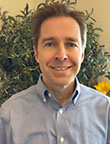
Jordan Sparks, DMD
Dr. Sparks is the founder and our current Executive Director. The reason for strong founder leadership at this stage is that brain preservation is nascent and we are in a growth phase. Centralized decision-making allows for the agility needed to respond to a rapidly evolving field, while the Advisory Board provides oversight and succession planning.
This board will take over the organization as the directors when Dr. Sparks chooses to step down from this role, dies, or is otherwise incapacitated so that he is no longer able to serve.

Andrew McKenzie, MD, PhD
Dr. McKenzie has been involved in cryonics and brain preservation since first signing up for cryonics in 2009. He is a licensed physician, bringing medical oversight to preservation protocols and patient care. His medical credentials also facilitate collaborations with hospitals and research institutions. His research focuses on the validation of preservation protocols using ultrastructural imaging and the development of evidence-based approaches. He also has institutional knowledge of and experience with long-term patient care at Sparks Brain Preservation, having worked there since 2023.
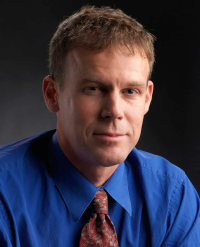
John Smart, MS
John Smart is a futurist and technology foresight professional with over two decades of experience advising organizations on long-term planning and accelerating technological change. He co-founded the Brain Preservation Foundation in 2010 and serves as its Vice President. He is CEO of Foresight University, a foresight consultancy with government, defense, and corporate clients. He holds an MS in Futures Studies from the University of Houston and is the editor of "Evolution, Development, and Complexity" (Springer, 2019) and the author of "Introduction to Foresight" (2022). His expertise in brain preservation, organizational foresight, and long-term planning supports our mission of perpetual patient care.
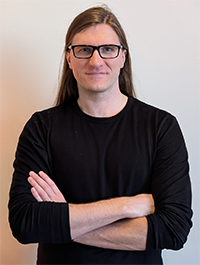
Mati Roy
Mati Roy brings extensive operational leadership in the cryonics and life extension fields. He has served as a board member and interim CEO of Critical Care Research, which conducts research on deep hypothermia for emergency medicine and cryonics applications. He is co-trustee of the Stasis Foundation, an organization dedicated to secure, indefinite storage for cryonics patients. He founded CryoQuébec, authored a comprehensive Timeline of Cryonics, and has visited every major cryonics facility in the United States. His familiarity with cryonics institutions, operations, and community needs provides valuable perspective on organizational sustainability and future potential collaborations.
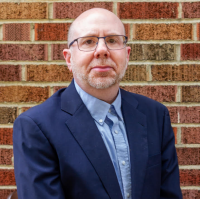
Michael Cerullo, MD
Dr. Cerullo is a board-certified psychiatrist and Research Fellow at the Brain Preservation Foundation. He previously served on the faculty of the University of Cincinnati, studying cognitive neuroscience and functional neuroimaging. He has been involved in brain preservation advocacy and research for over fifteen years. He has published peer-reviewed articles on the ethics and philosophy of brain preservation, including "Uploading and Branching Identity" (Minds and Machines, 2015) and "The Ethics of Exponential Life Extension through Brain Preservation" (Journal of Evolution and Technology, 2016). His dual expertise in clinical medicine and the ethics of brain preservation strengthens our commitment to both scientific rigor and ethical practice.
Long-term members may apply to also serve on our Advisory Board of Directors. If selected, you can help to shape our organization's future and ensure that its mission continues for generations.
Currently, this board serves in an advisory capacity. Upon Dr. Sparks' departure, the board will assume full governance authority. At that point, it will be structured as a self-perpetuating board, meaning new board members are elected by existing board members. This is the most common governance structure for nonprofit organizations and provides continuity of purpose over long time periods. If membership grows sufficiently and there are enough knowledgeable and engaged members, the board could choose to transition to a member-elected voting mechanism.
To give the board the resources necessary to ensure perpetual patient care, we are building up the assets of the organization. This includes paying off our building and accumulating reserves. Our costs for storage are low, and staff and operational costs can be permanently reduced if necessary. To raise funds, we could also sell our existing research assets such as our electron microscope, CT scanner, and other laboratory instruments.
Here are a few possible longer-term organizational outcomes.
Continued Service Operations: The organization continues to grow, attracting more members, donations, and resources, thus enabling expanded services and research into the distant future. This is our primary plan and it is why we are working on building organizational capacity, expanding our geographic reach, and developing sustainable revenue streams.
Technology Transition: Advances in preservation science or revival technology may eventually change the nature of our mission. If reliable revival becomes feasible, safe, and economically practical, we would transition from long-term storage to supporting patient restoration, which might be a phased process depending on the circumstances of their preservation and their expressed preferences regarding revival. Alternatively, if superior preservation methods emerge, we would evaluate adopting them for future patients while continuing to maintain existing patients under whatever protocols are optimal for them.
Hibernation Mode: If circumstances require it, we would scale down to minimal operations focused solely on maintaining existing patients in storage, with no active services or new revenue. The building would remain secure but with reduced activity. Our chemically fixed patients require only freezer maintenance, and volunteers would periodically ensure the maintenance of liquid nitrogen levels for our small number of cryopreserved patients. Because operational costs in this mode are minimal, hibernation mode is thought to be sustainable indefinitely from investment income on existing assets, without ongoing revenue.
Merger or Transfer: In the extremely unlikely case that our organization cannot continue operations even in hibernation mode, we would seek to transfer our patients to another reputable preservation organization.
Risk management is an important part of how we approach the problem of brain preservation. We systematically identify hazards, assess their likelihood and severity, and implement mitigation strategies. Our facility was intentionally located and constructed to minimize natural disaster risks, and we maintain security, backup power, and other systems to protect our patients. For a detailed discussion of this, see our Risk Management page.